
When intelligence reshapes operations

AI creates value when it strengthens the operating model; not just individual productivity.

The Intelligent Enterprise Operating Model

The shift

The structural shift

When intelligence moves inside the system (not alongside it), the enterprise begins to behave differently.

Decision cycles compress

Performance signals travel faster

Coordination becomes lighter

Confidence increases
This is not about doing the same things faster. It is about running the business differently. The change is visible in how decisions are made, how work scales, and how risk is managed.

The new model

Four structural shifts

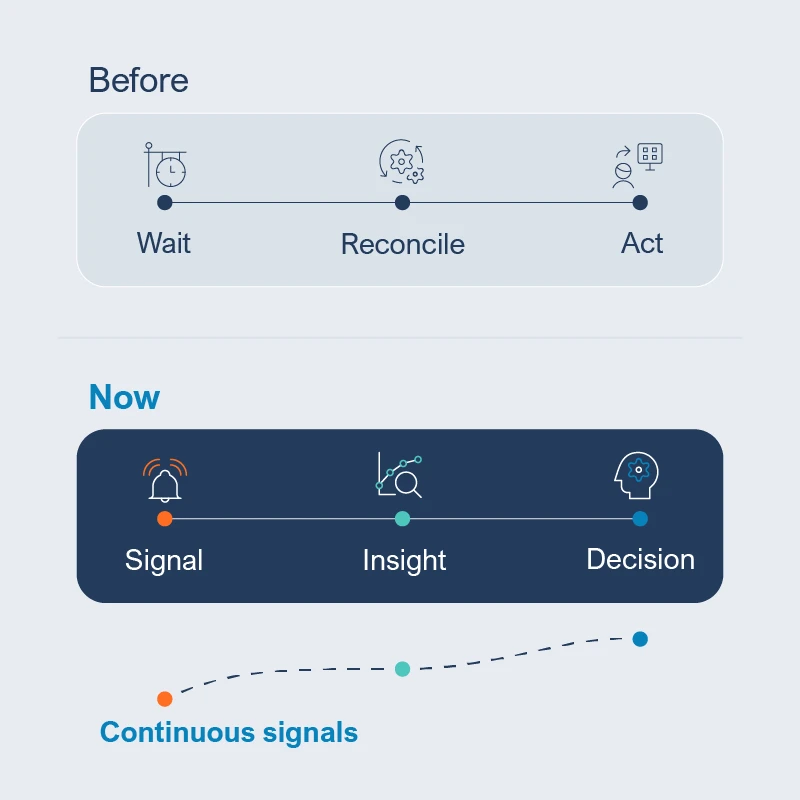
Decision velocity replaces decision latency

Decision velocity replaces decision latency

  • Leadership no longer waits for reconciled reports.
  • Performance signals flow continuously across financial, operational, and delivery systems.
  • Forecasts evolve as conditions change.
  • Intervention happens early, not after impact.

This is operational foresight, not retrospective control.

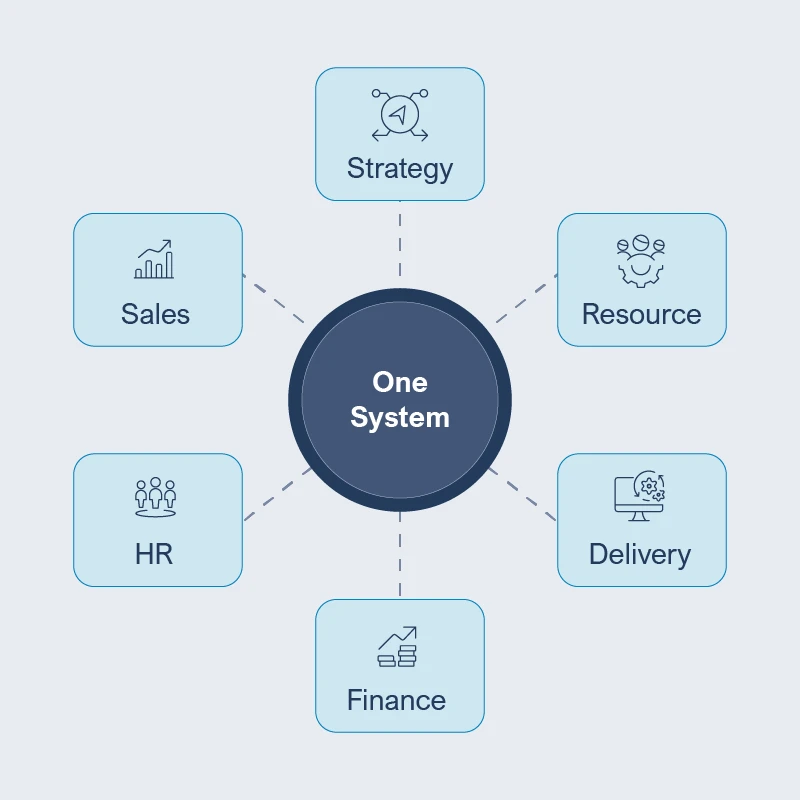
The business moves as one system

The business moves as one system

  • Execution becomes interconnected rather than sequential.
  • Resource allocation informs financial forecasts.
  • Delivery performance shapes capacity planning.
  • Strategic intent translates directly into operational priorities.

The organization operates as a coordinated whole, not adjacent functions.

Scale expands without structural strain

Scale expands without structural strain

  • Growth does not introduce fragility.
  • Routine coordination, monitoring, and reconciliation are embedded within workflows.
  • Leadership attention shifts from supervision to strategic inflection.

Scalability becomes architectural, not dependent on effort.

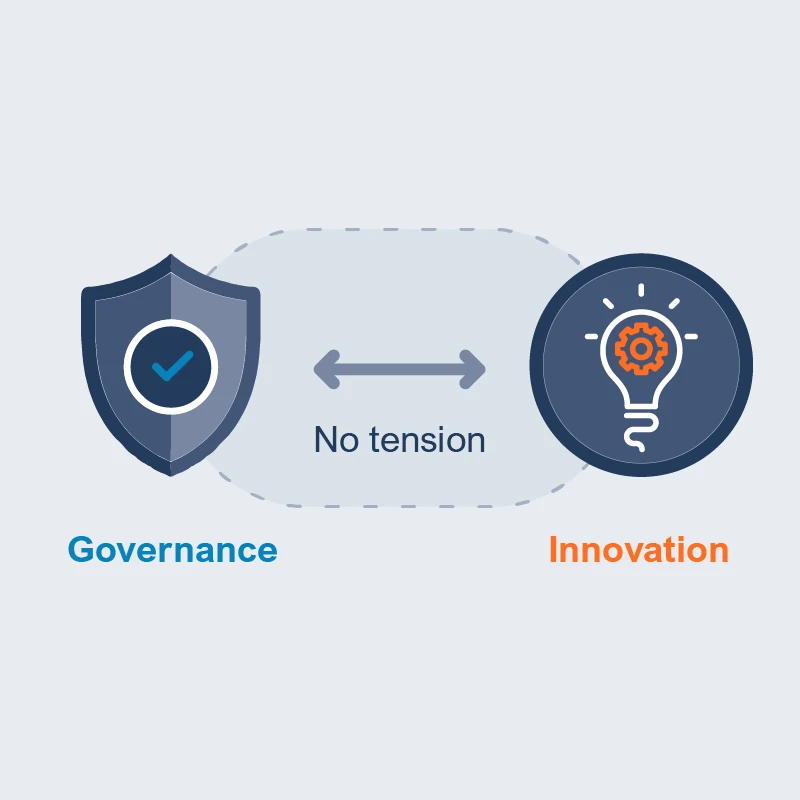
Innovation and trust coexist

Innovation and trust coexist

  • Intelligence functions within enterprise architecture, not around it.
  • Security models remain intact.
  • Permission structures are respected.
  • Governance scales with adoption.

Innovation no longer creates tension with risk management.

Economics

When the operating model evolves,
economics follow

Margin stability improves

Revenue leakage surfaces before quarter close

Resource utilization aligns with demand

Decision cycles compress

Strategic initiatives move faster

Foundation

What makes this possible

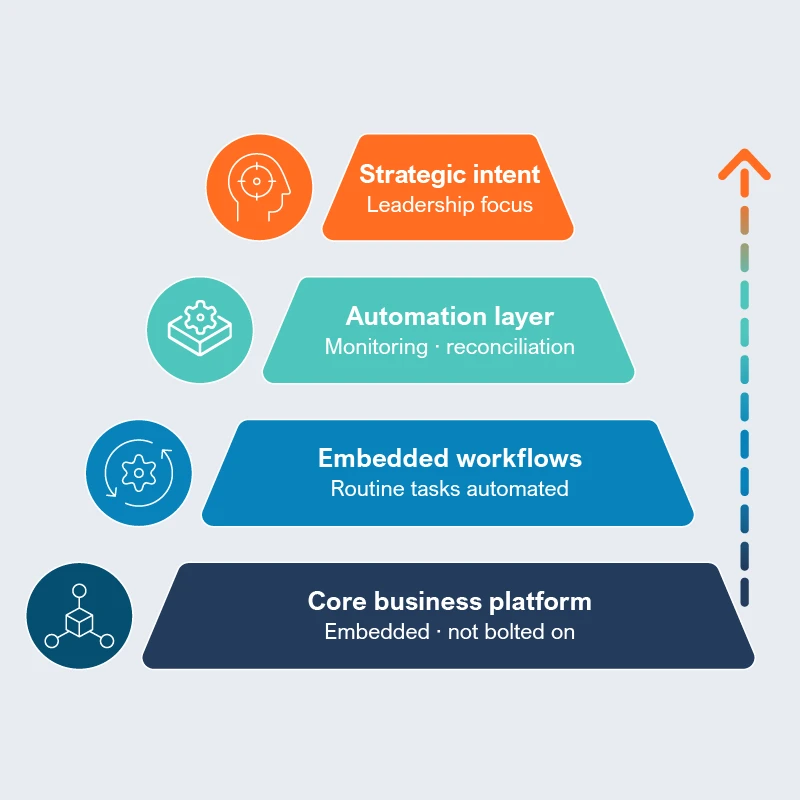
This level of performance does not come from standalone tools.

It requires intelligence that is:

Embedded within the core business platform

Contextual to industry workflows

Secure and permission-aware by design

Scalable across organizational complexity

When these foundations exist, AI becomes an operating capability.

AI as Operating Capability